Nuclear Power: Clean Energy or Costly Gamble?
by Christopher Zurcher, local artist
Nuclear power’s effects on human rights and environmental justice were the focus of author Linda Pentz Gunter’s presentation at a meeting in Hamden on Friday, Sept. 11, 2026.
Pentz Gunter, who founded the international advocacy nonprofit Beyond Nuclear in 2007, warned about the construction of massive energy- and water-consuming data centers, particularly as governors consider nuclear reactors to power them.
 Gov. Ned Lamont recently said the state would join its neighbors at a one-day regional policy summit that will explore the potential role of advanced nuclear technologies in the region. The 2026 New England Regional Nuclear Policy Summit on Sept. 30, 2026, will bring together “experts” to examine the potential for advanced nuclear technologies in the grid. He said the summit is “an opportunity … to learn more about the potential for new advanced nuclear technologies to contribute to our grid.”
But what about health risks from plants?
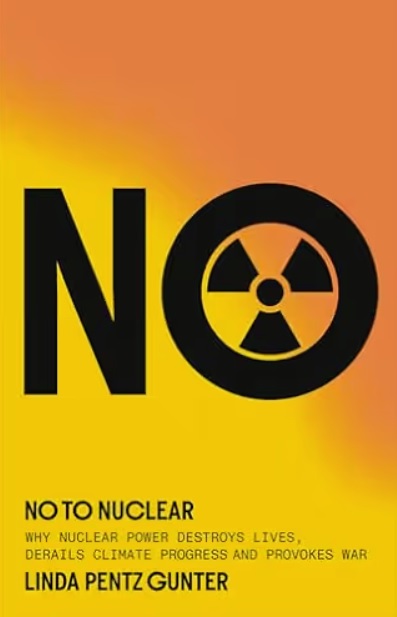
Pentz Gunter’s new book, No To Nuclear: Why Nuclear Power Destroys Lives, Derails Climate Progress And Provokes War (Pluto Press, April 2026), presents 10 reasons to reject nuclear power in favor of solar and wind, challenging claims that nuclear energy is safe, clean or green.
She argues that nuclear reactors take too long to build, cost too much, and leave behind the unresolved problem of radioactive waste, with disproportionate and unjust impacts on Indigenous peoples and communities of color.
“While nuclear power is technically feasible, it is highly complex, involving a long and polluting uranium fuel chain and with an unsolved waste problem,” Pentz Gunter said. She added that nuclear fuel is “more than a million times more radioactive when it comes out” of a reactor, contributing to the industry’s costs and hazards to human health.
Pentz Gunter also cited studies, including a recent one from Harvard, reporting higher incidences of cancers and leukemia among populations living near nuclear power plants.
“There is absolutely no justification for taking such a risk when safer, cheaper alternatives like renewables can rapidly deploy today,” she said.
“Our elected officials need to hear from us,” Pentz Gunter said, arguing that voters should hold officials accountable for supporting data-center and nuclear projects that threaten our health and the environment.
The nuclear debate is hardly new. More than a decade ago, the late Judi Friedman of People’s Action for Clean Energy wrote in these pages that nuclear power survives because of extensive public subsidies, while delays in expanding shared solar and other clean-energy investments leave consumers vulnerable.
For more, visit plutobooks.com/product/no-to-nuclear, beyondnuclear.org, pepeace.org/resources, pacecleanenergy.org.